Why choose G. Art?
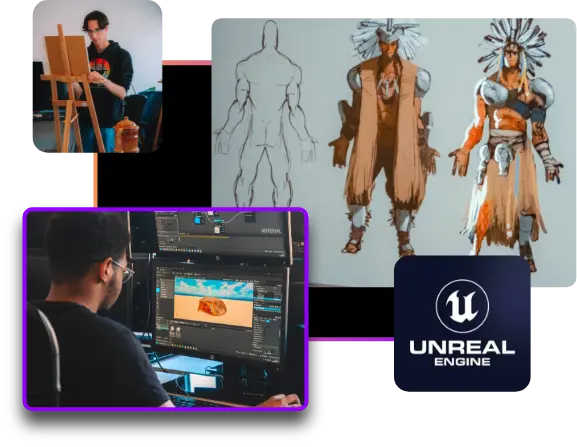
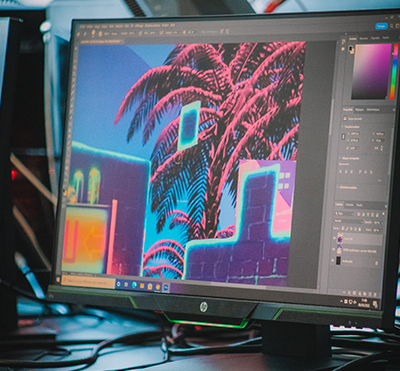
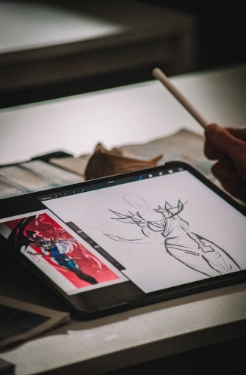
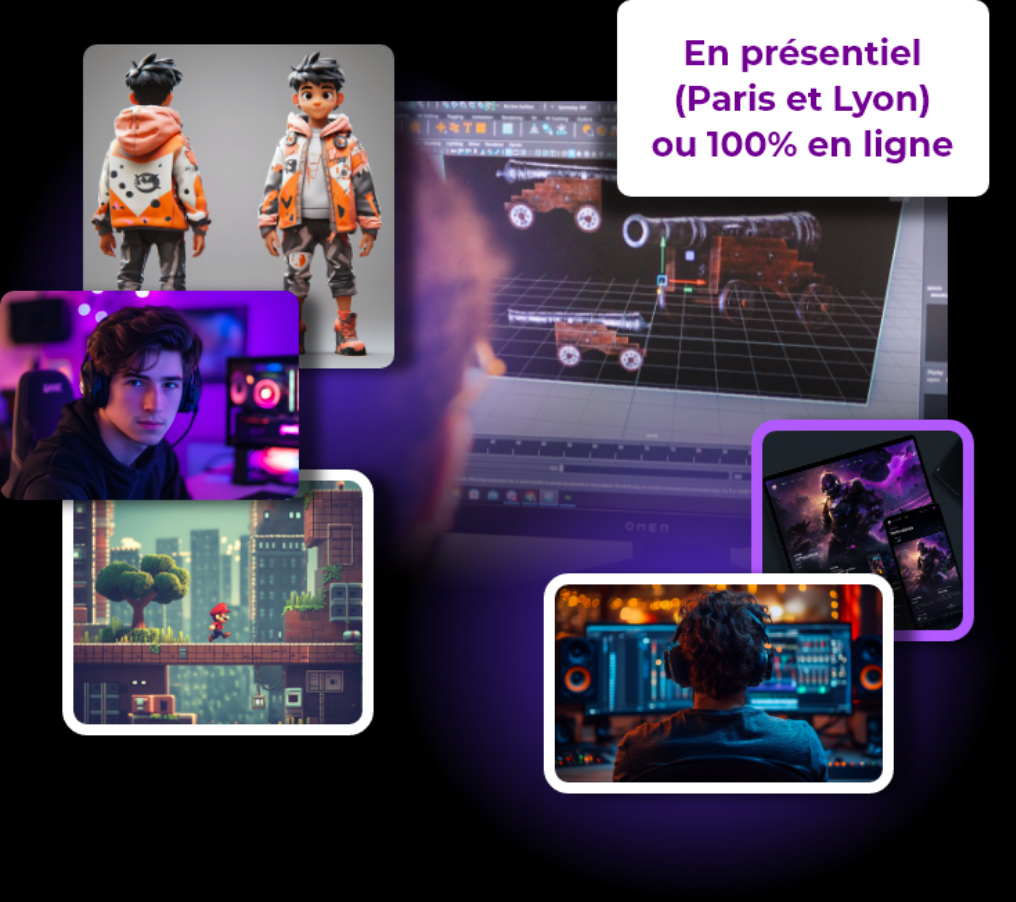
We train artists who can bring characters, sets and environments to life, mastering concept art, 2D, 3D and art direction.
G. Art aims to help students turn their passion into a career with a future, training the talent of tomorrow that digital companies, and especially video game companies, need.
By the end of the 1st cycle (bachelor), you will have acquired a solid cultural, artistic and technological grounding to prepare you for a career as a versatile artist with a strong appetite for digital.
The Mastères will allow you to specialise in video games.
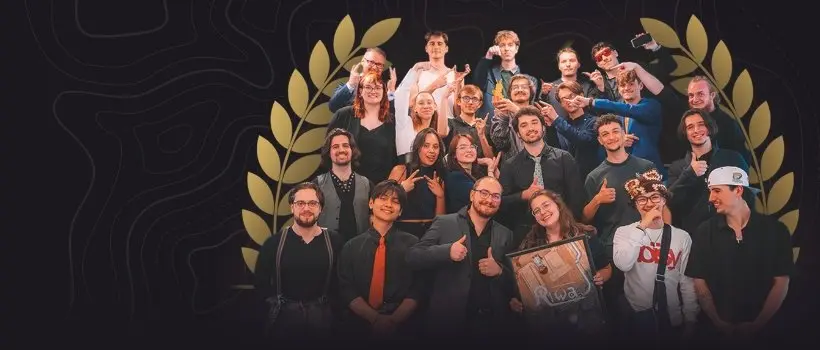
Gaming Campus award-winning for the second year running
Post-baccalaureate to Bac+5 programmes outside Parcoursup and Mon Master
G. Art awards 2 levels of specialised degrees: a 3-year bachelor and 5-year Mastères
Find the programme that matches your profile and ambitions:
Click here to find out about our arrangements for welcoming and supporting people with disabilities.
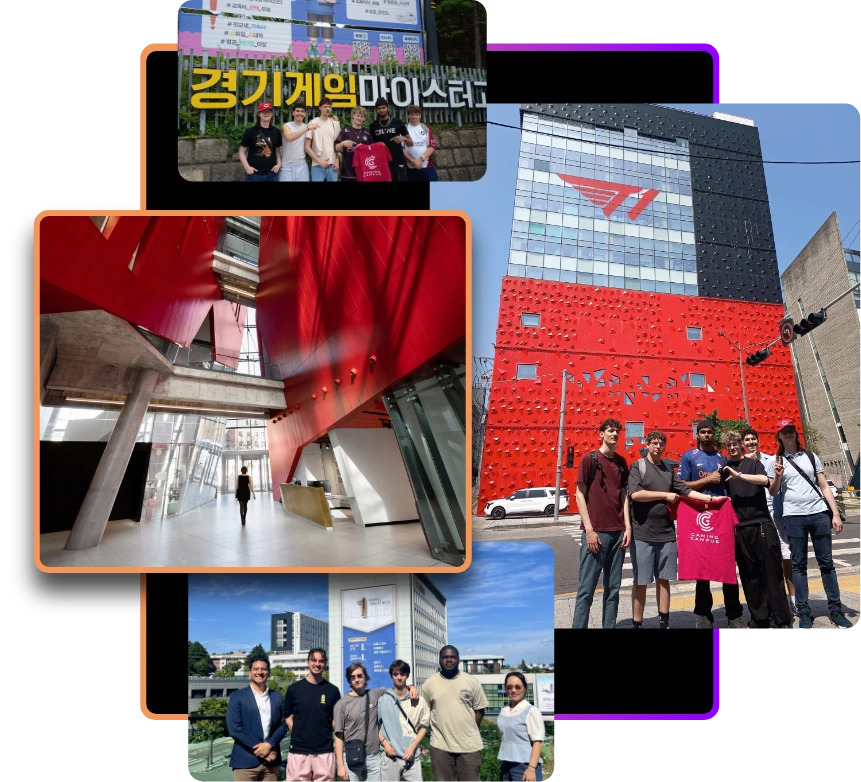
Study abroad with Gaming Campus
Enjoy a unique academic and cultural experience abroad
At Gaming Campus, we believe that an international outlook is a real asset for future professionals in video games and immersive experiences. Thanks to our partnerships with higher education institutions abroad, our students have the opportunity to complete part of their studies internationally while continuing their training in their field of specialisation. These mobility programmes allow students to discover new teaching methods, broaden their skills, build an international network and enjoy a unique human and cultural experience.
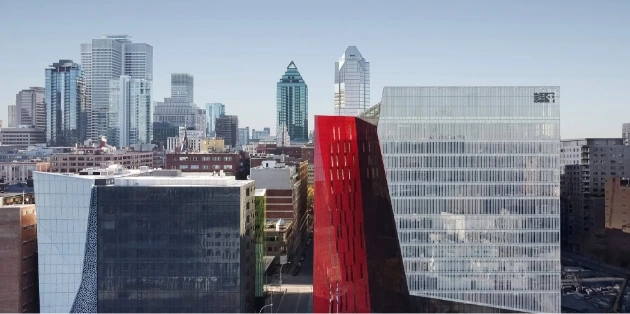
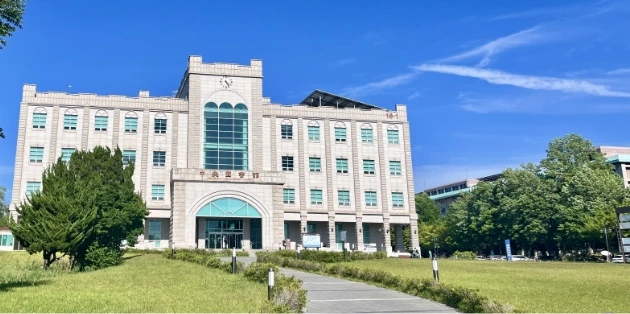
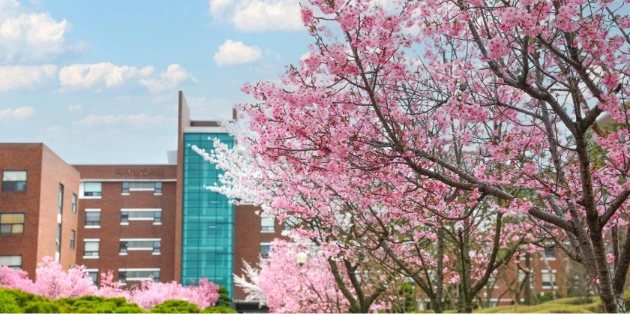
Discover our 3 partner destinations in Canada and South Korea*
An international experience that makes the difference
Going abroad with Gaming Campus means:
- Broadening your skills through new learning methods.
- Boosting your employability with experience valued by recruiters.
- Building your network with students and professionals abroad.
- Gaining independence in a new cultural environment.
- Exploring other ecosystems in video games and digital technology.
*International mobility programmes are offered to Gaming Campus students, subject to application and within the limit of available places.
Selection procedures, timetables and conditions of participation are communicated to students by the International Relations department.
Destinations, periods and mobility arrangements may change depending on agreements with our partner institutions.
REQUEST A BROCHURE
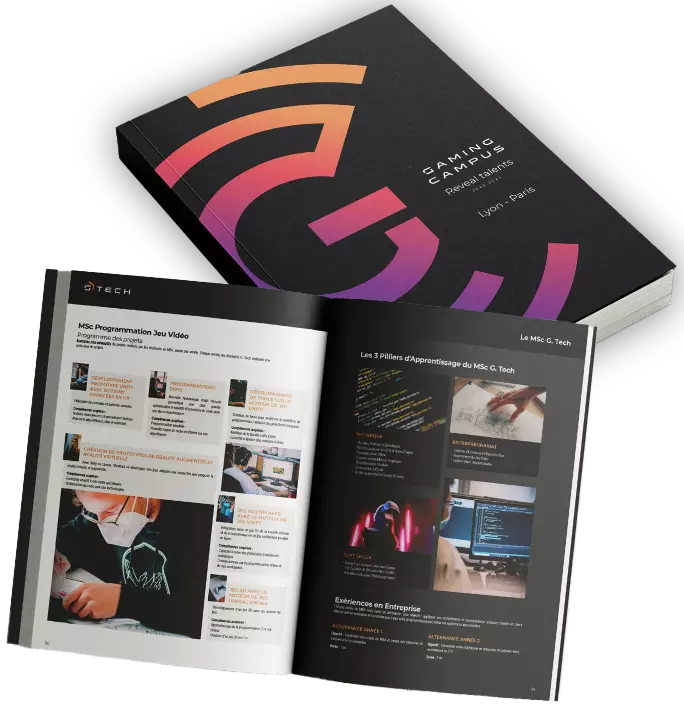
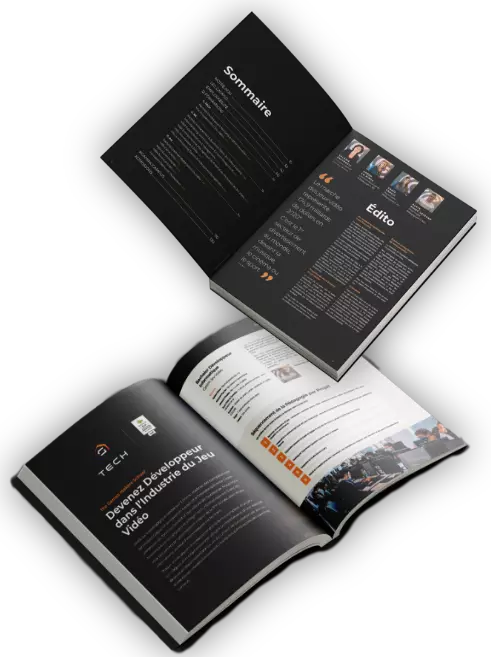
178 pages to discover G. Art – 2D/3D Art School, as well as the 2 other Gaming Campus schools. Lots of exclusive content to better understand how our schools are positioned and why Gaming Campus is unique.
Project-based learning
Active Learning by Gaming Campus
Gaming Campus takes an innovative approach through project-based learning tailored to the realities of the market. Its aim is to give students the skills they need for lasting employability and constant adaptability. The methods used provide intellectual challenges and stimulate their creativity and curiosity. Project-based learning also fosters interdisciplinarity between students, giving them the opportunity to venture beyond their own disciplines and draw on cross-functional skills.
It is essential that students can practise before facing these situations in the workplace.
Finally, the curricula are co-designed and adjusted in real time with partner companies. They include all the skills and knowledge specific to the video game and digital arts industry.
Projects
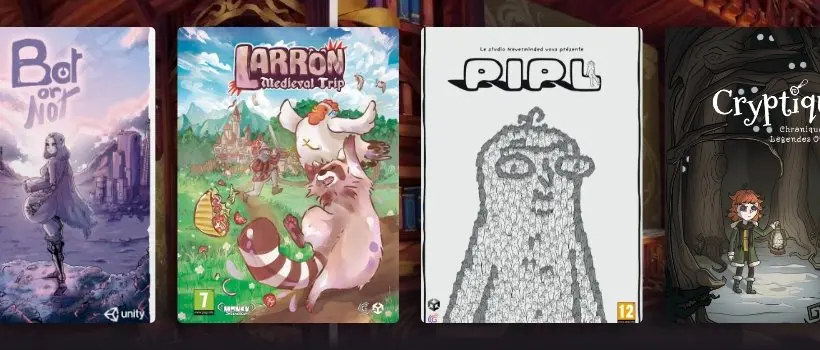
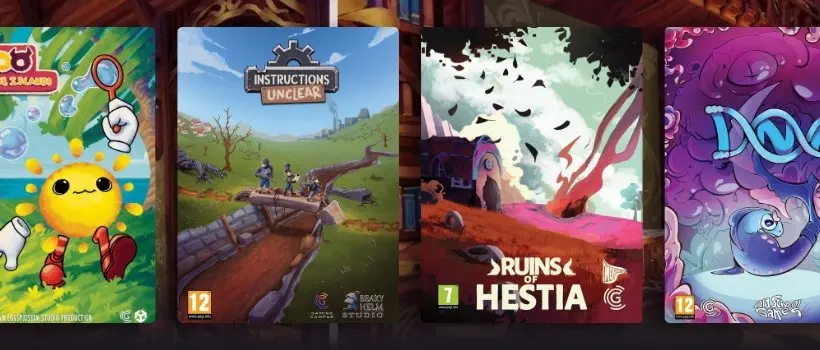
Every year, G. Art students complete around fifteen projects. Here are some examples (non-exhaustive) of projects completed by bachelor and MBA students:
Through observational drawing, understanding the visual world around us. Discovering and adding your own personality to create your own style and go beyond technique, in order to convey ideas from the simplest to the most complex.
Skills acquired:
• Develop your own way of seeing, an ability to understand the shapes around you and to integrate, distort and reformulate them.
• Develop a particular self-confidence in understanding reality, enabling you to communicate ideas through drawing.
First contact with the principles of animation, introduction to 2D animation. Thinking about and understanding animation, keeping a volume/drawing consistent over several frames. Software used: Photoshop, Toon Boom Harmony.
Skills acquired:
• Knowledge of the principles of animation.
• Awareness of the importance of drawing in volume in order to animate.
• Introduction to animation software.
Practical application of art history and the sociology of culture in video games, developing an artistic culture ranging from art brut to contemporary art, via many unconventional movements.
Skills acquired:
• Develop your artistic and historical analysis.
• Draw on this culture to create your own coherent, innovative worlds.
• Create a unique, coherent world and illustrate it.
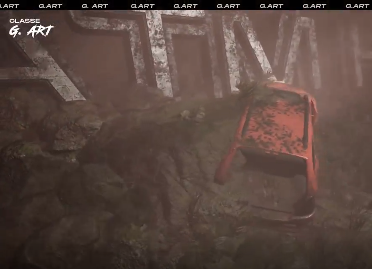
Create and develop a coherent art direction for an AAA game, as part of an interdisciplinary project.
Skills acquired:
• Establish the game's visual style and artistic vision: logos, marketing content, visual effects, characters, terrain and architectural elements.
• Supervise the research and art direction of all concept art produced for the game concept.
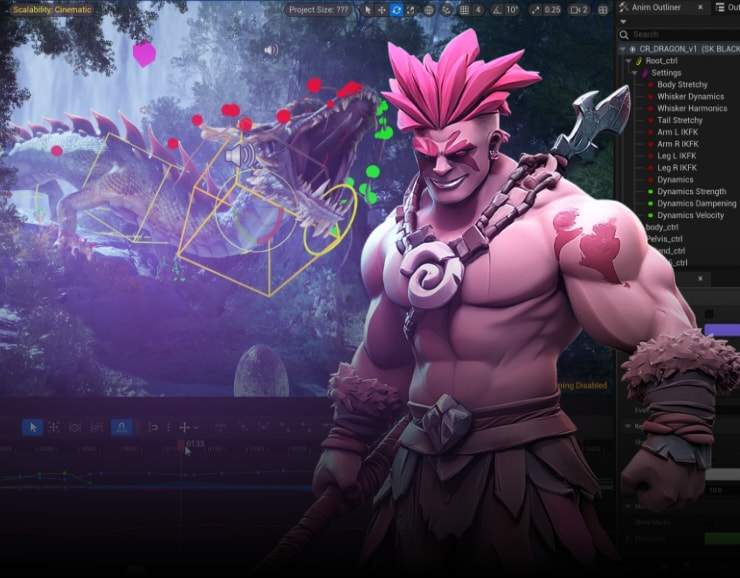
Be able to produce and create in 3D all the " living " elements of a mini-game: wildlife, NPCs and heroes.
Skills acquired:
• Full high-poly character modelling and integration into an engine.
• Mastery of Maya and ZBrush.
• In-depth knowledge of Unreal Engine and Marvelous Designer.
• Advanced texturing with Substance Designer/Painter.
• Advanced PBR and NPBR rendering.
Creating a virtual reality and augmented reality experience for a mobile game. The student is responsible for producing the various visual effects.
Skills acquired:
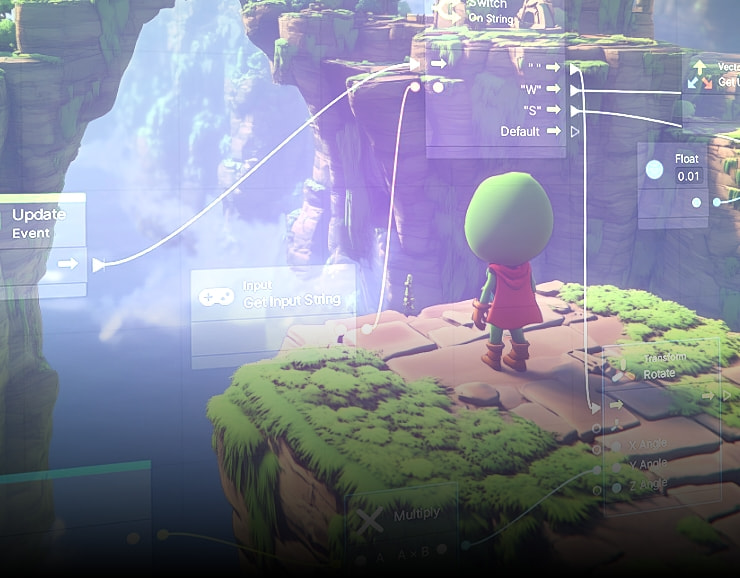
• Introduction to tools: VFX Graph / Shader Graph, Timeline, Cascade.
• Learning the concepts of draw call, overdraw, LoD.
Creating a project using Houdini.
Skills acquired:
• Creating a vertex density heatmap.
• Introduction to Houdini (Attributes, nodes, ..).
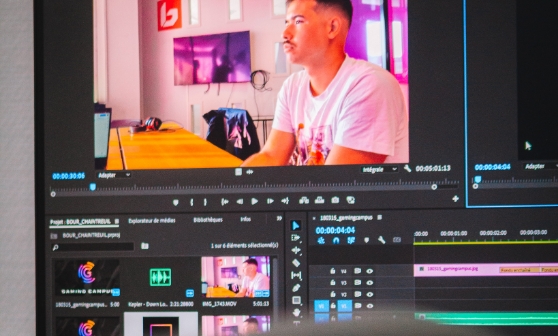
Interdisciplinary project, in groups of G. Art and G. Business students: creating and producing a 30-second to 1-minute teaser/trailer to promote a game launch.
Skills acquired:
- Cinematic language built on compelling elements: storyboard/animatic/teaser.
- Video creation (pacing, animation, integrating text and music) and motion design.
- Learning Premiere Pro & After Effects.
Learning to use the Unreal game engine to produce cinematics.
Skills acquired:
- Using Unreal to create 3D environments.
- Producing cinematics.
- Understanding the challenges of real-time rendering.
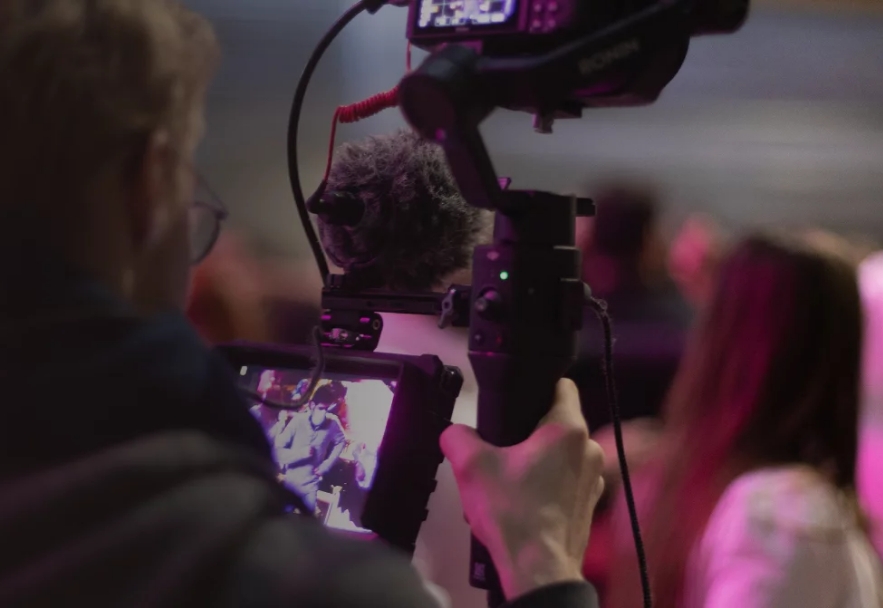
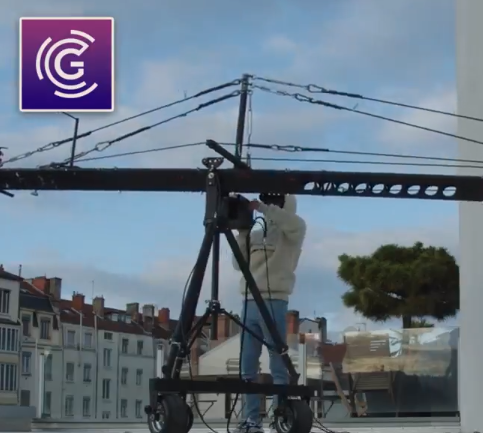
Getting to grips with professional equipment that can be used at a video game event.
Skills acquired:
- Learning to use a crane.
- Learning to use tracks.
- Shooting dolly shots.
Internships and work-study video game programmes
From the 1st year, students on G. Art programmes gain significant experience in companies.
The aim is to refine their career plans, develop their skills and build a network.
In the bachelor, one internship every year, lasting 2 to 6 months each, for a total of 1 year of company experience by the end of the bachelor.
In the MBA, both years are work-study. Students can complete their video game programme as work-study under a professionalisation contract, an alternating internship or a permanent contract (CDI).
The programme is adapted to the most effective company schedule. For two years, our priority remains your employability. The entire programme is designed around this fundamental principle. G. Art supports students throughout the year in finding internships, work-study placements and their first job.
internships COMPLETED BY OUR STUDENTS
VIDEO GAME CAREERS
29% of job offers in the video game sector are for computer graphics roles (AFJV - 2018)
The most sought-after profiles are in the new graphic creation careers, especially those that call for the most technical skill.
Dive into digital arts and the many specialisms of video game art techniques.
- Game designer Find out more >
- Concept artist Find out more >
- Level designer Find out more >
- VFX Artist Find out more >
- Video editor Find out more >
- Sound designer Find out more >
- 3D modeller Find out more >
- Character artist Find out more >
- Video game UX designer Find out more >
- Video game UI designer Find out more >
RECOGNITION
Like all Gaming Campus programmes, the Bachelor 2D/3D Computer Graphics & Audiovisual, Video Talent and the MBA Game Artist & Technical Artist are recognised by institutions and companies
PARTNER COMPANIES
9 companies with very different activities, DNA and sizes are G. Tech partners. A real asset for adapting the school's teaching to the needs of every kind of company.
MENTORS
85% of the jobs of 2030 don't exist yet. Our mentors share their experience with you and help you anticipate market changes.
Smart VR Studio
Tuto.com
Oh bibi
Freelance
Freelance
CBI
Freelance
Freelance
Freelance
Samsung Ads
2023 VIDEO GAME SCHOOL RANKINGS
Gaming Campus is ranked 2nd in the video game school rankings
5 rankings, 11 criteria and a ranking of rankings to discover video game schools in France. Compiled solely from publicly available data.
Video game art school in Paris
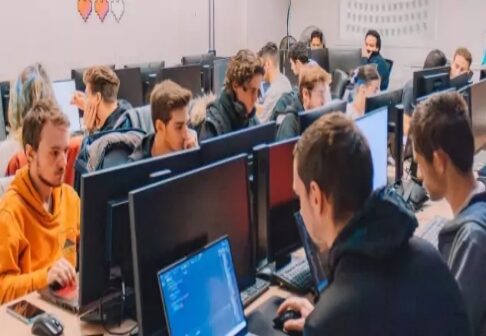
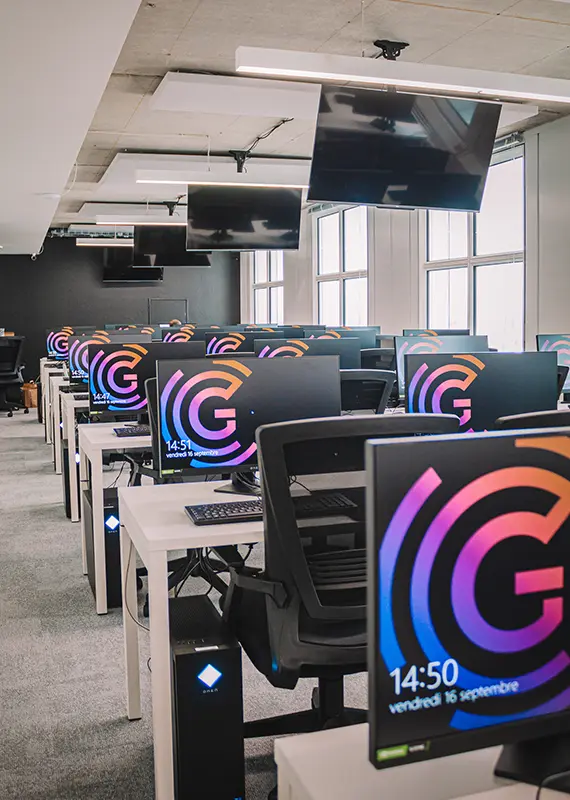
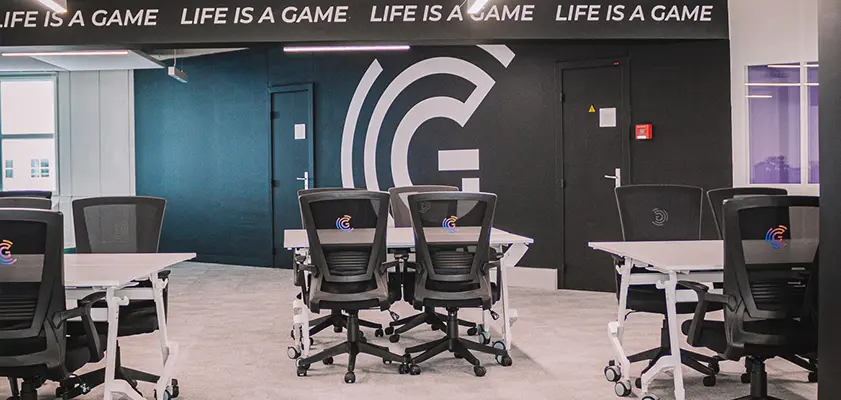
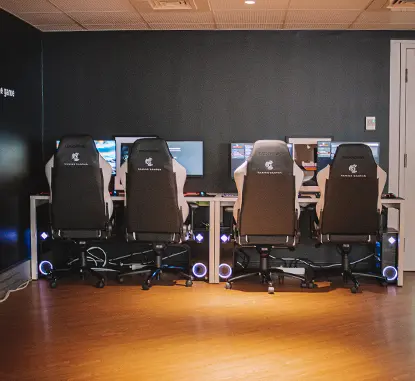
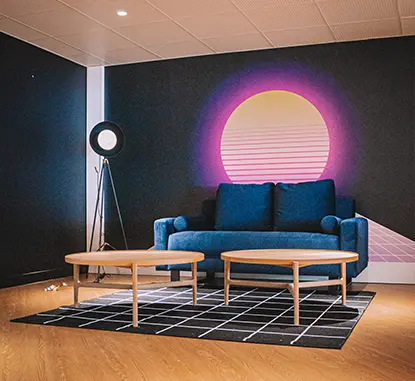
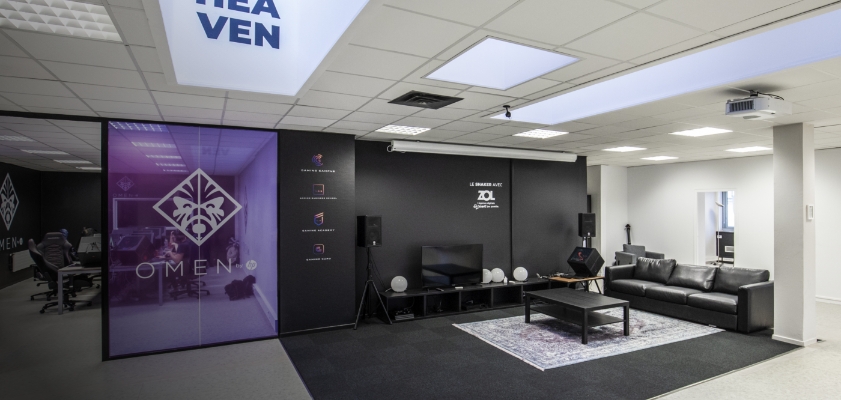
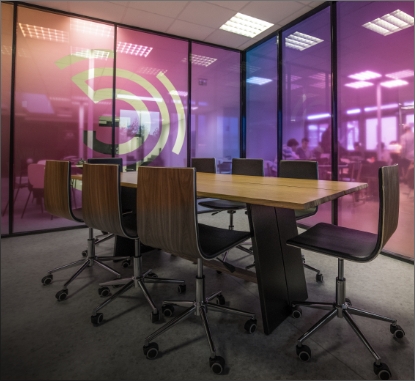
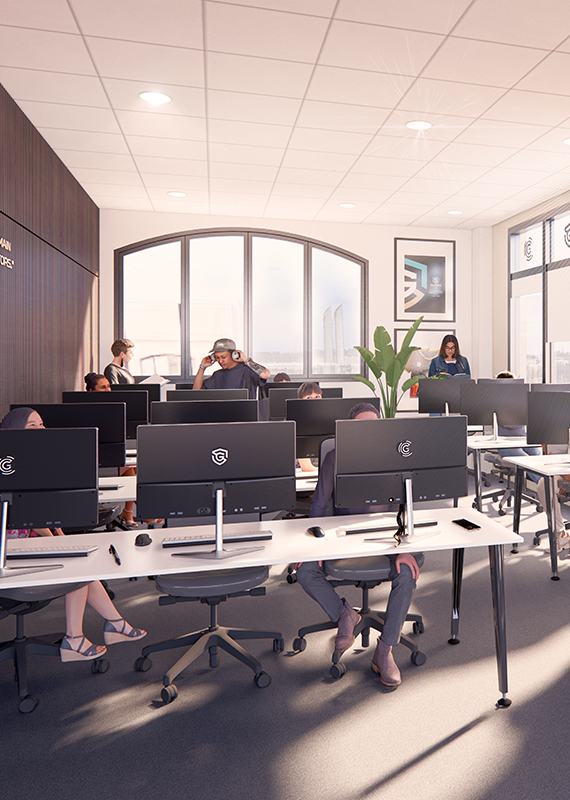
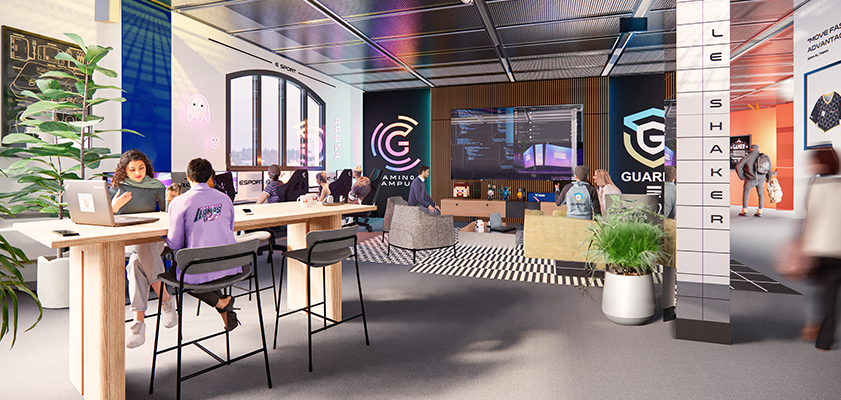
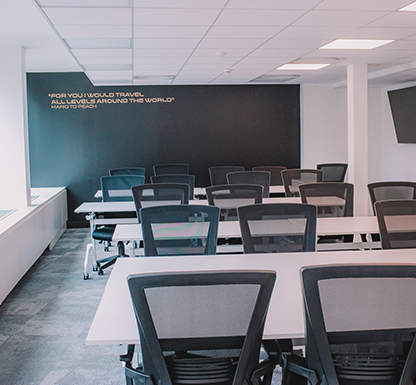
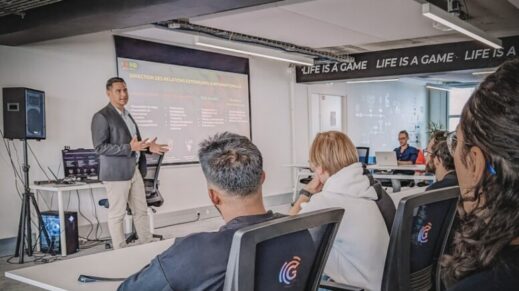
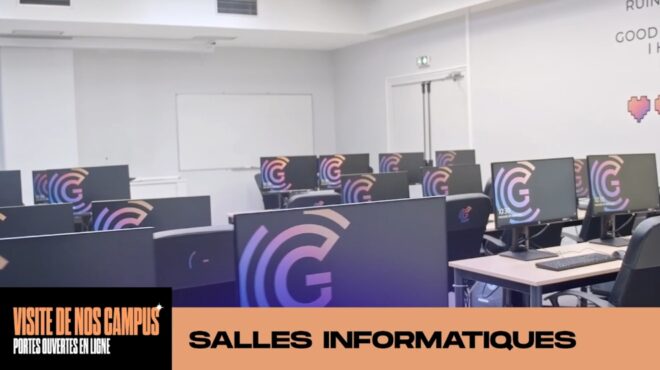
2,500 m2 dedicated to gaming, 10 work and living spaces, 3 computer rooms and high-end equipment to study in the best conditions.
relaxing and working.
Video game art school in Lyon
2,500 m2 dedicated to gaming, 15 work and living spaces, 5 computer rooms and high-end equipment to study in the best conditions.
relaxing and working.
Video game art school in Bordeaux
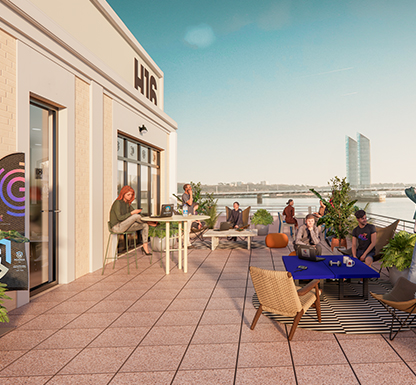
1,000 m2 dedicated to gaming, 12 work and living spaces, 2 computer rooms and high-end equipment to study in the best conditions.
relaxing and working.
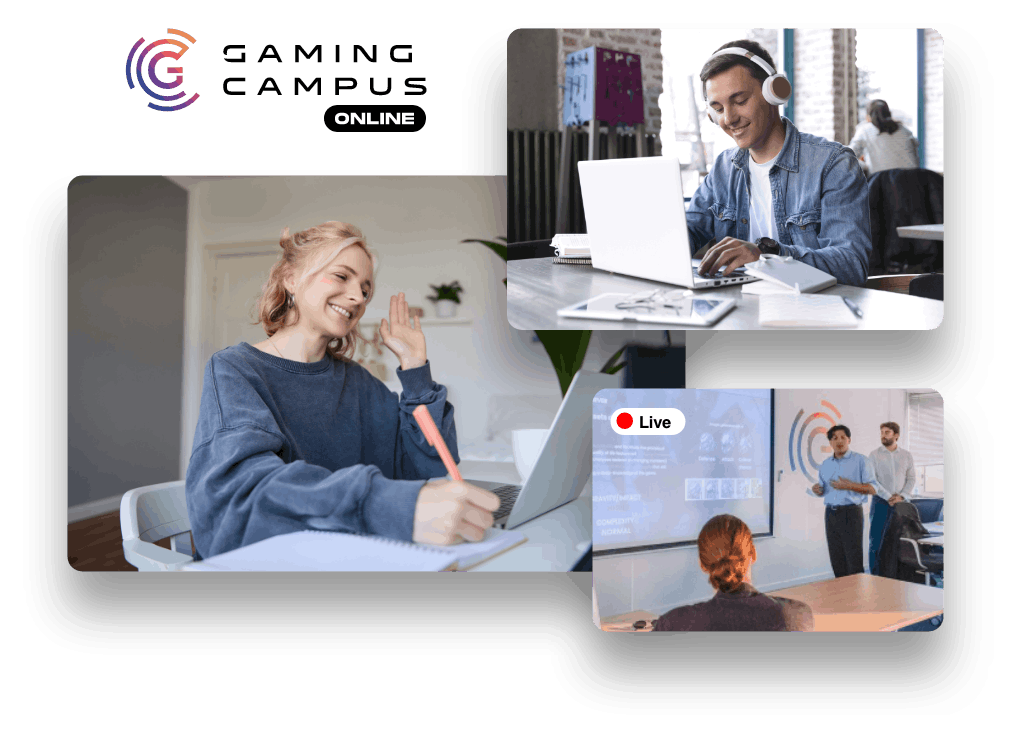
The following G. Art programmes are also available remotely:
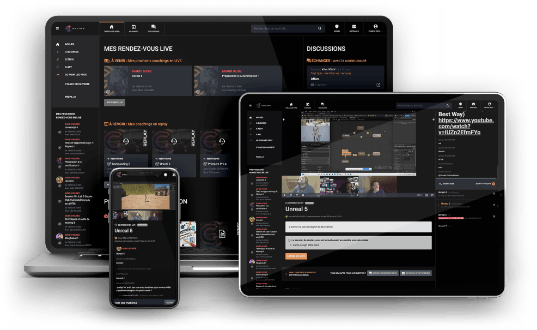
Attend live classes and masterclasses, enjoy replays available 7 days a week, interact live with lecturers and other students…
- Study from home (no accommodation or travel constraints)
- Join your class made up of on-campus and remote students (identical programme)
Attend live classes and masterclasses, enjoy replays available 7 days a week, interact live with lecturers and other students.
ADMISSIONS
How do you get into our G. Art video game school?
Bachelor 2D / 3D Computer Graphics and Bachelor Audiovisual, Video Talent
Admission takes place in two stages, without going through Parcoursup. First, you fill in and submit your application via the school's website. Then, once we have reviewed your prerequisites, career plans and skills, our teaching or admissions team will interview you (for one hour on average). You will then be informed of the outcome: admitted, on the waiting list or not admitted. Note that with this application-based method, we give everyone the chance to join our programmes, as we attach great importance to the diversity of our cohorts.
Admission to the 1st year:
2D/3D Computer Graphics: With a general baccalaureate with a specialism in visual arts, digital and computer sciences, or life and earth sciences, or via the STD2A technological baccalaureate (Science and Technology of Design and Applied Arts).
Bachelor Audiovisual, Video Talent: Baccalaureate level (general, technological or vocational) and a keen interest in images, video, streaming, video editing, etc.
Direct entry into the 2nd year:
2D/3D Computer Graphics: You must have completed a first year in graphic design. This may be a BTS, a DN MADE or a DNA.
Bachelor Audiovisual, Video Talent: You must have completed a Bac+1 in a DUT MMI or BTS Audiovisual.
Direct entry into the 3rd year:
2D/3D Computer Graphics: You must have completed a Bac+2 in graphic design. In other words, you must already have a BTS, or have completed two years of a DN MADE or DNA.
Bachelor Audiovisual, Video Talent: You must have completed a Bac+2 DUT MMI or BTS Audiovisual.
MBA Game & Technical Artist
The admission procedure for the MBA at G. Art is relatively quick and simple. Open to all, with no competitive exam but based on an application, you simply complete it and submit it via the school's website. Our teaching and admissions team then reviews your application and selects candidates based on their career plans, academic background and our prerequisites. A one-hour interview is then held in person on campus or online. The admissions panel takes both the application and the interview into account.
Joining the 4th year:
You must have completed a Bac+3 in graphic design, i.e. a DNA or a DN MADE.

2D/3D Computer Graphics: A general or technological baccalaureate allows you to join G. Art.
The most relevant general baccalaureate specialisms are visual arts, digital and computer sciences, and life and earth sciences. As for the technological baccalaureate, the STD2A is the most relevant.
Bachelor Audiovisual, Video Talent: Baccalaureate level (general, technological or vocational) and a keen interest in images, video, streaming, video editing, etc.
2D/3D Computer Graphics: You can join G. Art with a BTS in Graphic Design, or after completing two years of one of these programmes: DN MADE (graphic design or digital), DNA (art, design or communication option).
Bachelor Audiovisual, Video Talent: You must have completed a Bac+2 DUT MMI or BTS Audiovisual.
You can join G. Art with a DN MADE in graphic design or digital, or a DNA with an art, design or communication option.
Funding
Tuition fees
Find the tuition fees for each of our programmes by clicking here.
Company placements: every year of the MSc, you do a work-study placement in a company. This work-study placement lets you fund your programme and earn a salary. The teaching team helps you find a work-study placement and negotiate your pay.
Student loan on preferential terms: LCL is G. Art's main banking partner. You can obtain special loan terms for your programme and a privileged relationship. Feel free to contact us for more information.
State-guaranteed student loan: since June 2020, the French State can act as guarantor for your loan to make it easier to obtain. Visit Etudiant.gouv.fr to find out more.
Campus jobs: Small jobs helping to develop the campus are sometimes available. The teaching team also gathers and shares small job offers near the campus.
City aid: Check with your town of residence, or your parents', to find out whether you are eligible for the Revenu Minimum Etudiant (RME). Not all towns offer the RME. The RME is awarded by the CCAS (Centre communal d'action sociale).
Département aid: For students receiving grants, the departmental councils offer annual grants or interest-free loans (prêts d'honneur).
Fondation de France aid: 120 foundations award grants and interest-free loans. We encourage you to contact the Fondation de France to find out more.
Finding accommodation: We help you find accommodation through our network of housing partners. We have built close relationships with student residences near the campus.
Maximise your chances of getting into G. Art - 2D/3D Art School
with La Prépa Jeux vidéo
PROGRAMME FROM AGE 16
A preparatory year to try out every video game career (art, audio-video, software development, business) and prepare you to apply to any video game school.
Open from age 16, with or without the baccalaureate, and offered in two formats: on campus (Paris, Lyon) or 100% online.
Student reviews
I had a great time at this school; the teaching team for the G.Art track is great, as are the lecturers.
You need to be sure of what you want before joining a school like this one and find out about career prospects and the current state of the video game sector, but personally I had a very good experience.
I'm on the Game Designer programme at Gaming Campus and I find it excellent. The lecturers are high quality and, beyond being taught by people from the video game industry, it lets you build connections with people who share the same passions and ambitions.
On the downside, I'd say some technical bugs on the platform could be fixed, but that didn't spoil the experience.
Truly exceptional personalised support. I didn't expect the programme's teaching team to be so attentive to our projects. Thanks to Jonathan, Louison, Quentin, Laetitia and all the other lecturers for their support throughout the programme.
I took the online game designer programme. It was a very good experience; the lecturers were interesting and gave us a good view of the video game industry.
The programme is also well organised, and the people running it are very kind and support us throughout.
Video editing for the web programme completed in 2022/2023 at Gaming Campus.
A comprehensive programme with qualified lecturers who gave valuable advice for the various projects and end-of-year exams.
As a student at Gaming Campus, I'm genuinely satisfied with the quality of the teaching and the environment. The school stands out for its career-focused approach, notably thanks to project-based learning (collaborative projects, talks by professionals and links with the video game industry).
The premises are modern and suited to students' needs, with state-of-the-art computer workstations.
The teaching teams are attentive and invested in students' success, even supporting us on professional projects that aren't necessarily related to video games.
The many projects (such as the 3rd-year Grand Joint Project) give real hands-on experience by collaborating with a variety of profiles from business, development and art.
Overall, Gaming Campus is an excellent school for anyone who wants to build a career in the video game industry through practical, career-focused training, and who loves taking on new projects!
Very warmly welcomed when I came for the exam session to take part of the " audiovisual editor " certification. Can't wait to come back for another event!
If you're thinking of enrolling on this programme, prepare yourself mentally and get well organised, especially if you have a job and a family life. The programme is demanding and requires a lot of commitment, between an individual project and a joint project involving all stakeholders, simulating how a small studio works.
The programme adapts to all levels, whether you're a beginner or already working in the video game industry. It covers several key areas:
Video game market analysis to position your game well and optimise its sales.
Designing the documents needed to create a video game.
Prototyping in Unity or Unreal Engine, with programming lessons adapted to both engines.
My personal experience
With a background in digital design and a passion for video games (adventure and MMORPGs), I started with a few advantages. However, I had never used a game engine before.
Individual project: I chose to create a short adventure game to keep the approach fun and motivating throughout the programme. The time commitment was significant and, as a programming novice, I found learning Unity slower because of C#. On the other hand, with Unreal Engine and its blueprints, I was able to progress more quickly. Choosing the engine is therefore crucial, depending on your preferences and learning goals.
Group project: in a team with developers, editors, UX/UI designers and QA testers, we worked on a project set by the school, simulating a real studio production. This experience teaches collaboration and adaptability, qualities that are essential in the industry. What’s more, this project can enrich your portfolio and demonstrate your ability to fit into a team.
Valuable support and a network
The programme allowed me to meet wonderful people, among both the students and the teaching team. Peer support is essential to stay motivated and progress together. The teaching support is also a real plus, with live evening classes, replays available and a Discord server that makes communication easy.
Overview
Thanks to this programme, I now have two projects in my game designer portfolio. I also discovered a real interest in programming, because seeing your game come to life is an incredible source of motivation. This programme is an excellent opportunity to learn, practise and build a network in the video game industry.
A very good organisation offering precise and comprehensive programmes.
Student interviews
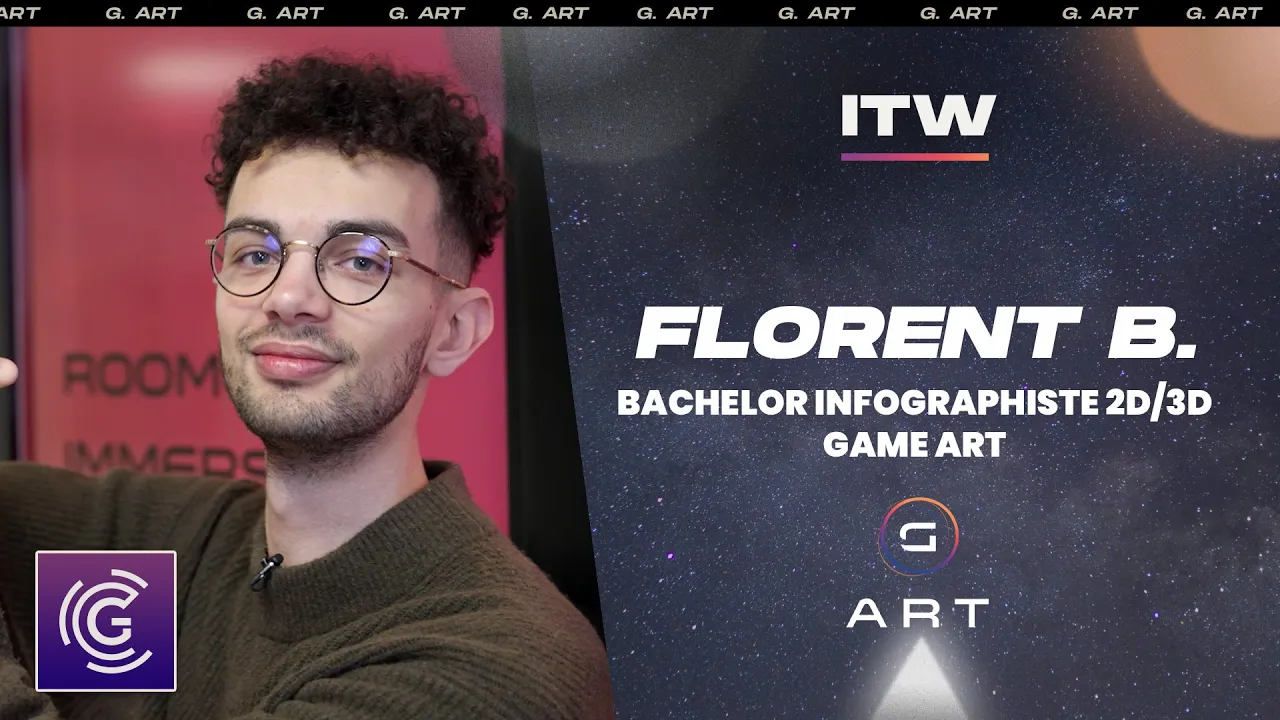
G. Art students share their stories
They tell us why they chose to study at G. Art and share their ambitions and career plans.
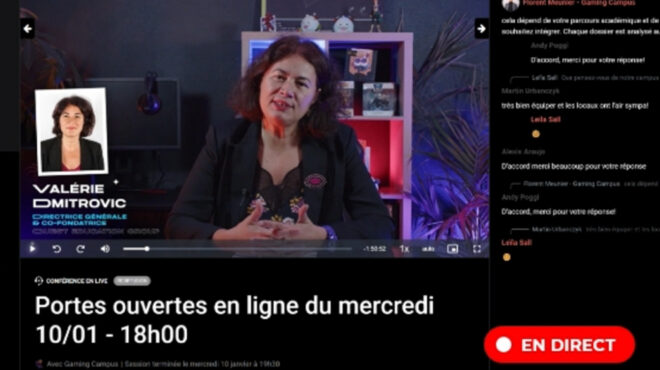
Come and meet us at our Open Days
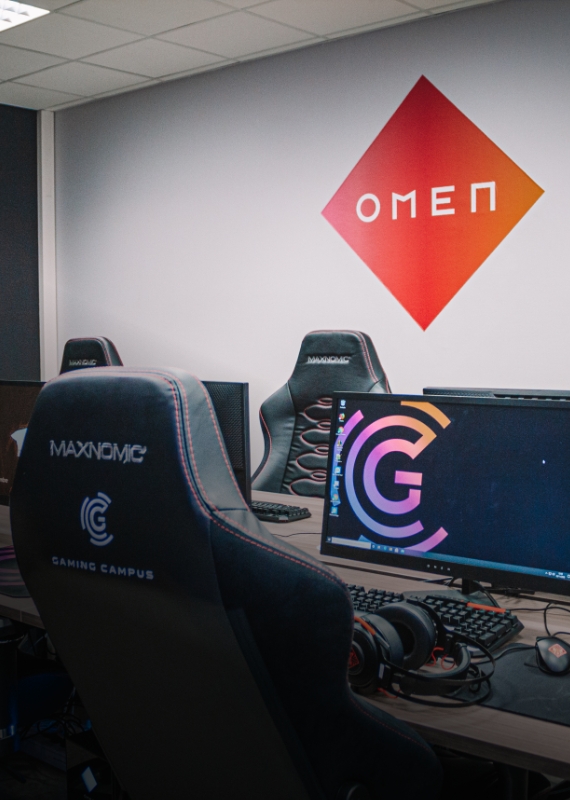
- Tour of our campus (OMEN computer rooms, shaker, esports arena, VR room, artists' workshop, language rooms…)
- Presentation of the schools and programmes (work-study tracks available)
- Testimonials from our students and industry professionals
- Live Q&A
- How to join Gaming Campus (outside Parcoursup)
Apply for the programme of your choice
Simple application, quick response:
September 2027 intake: Applications open
We have chosen an application process with no competitive exam and without going through ParcourSup or Mon Master. This allows us to review each application individually and maximise equal opportunities and each candidate's potential. It also lets us give the academic background the same weight as the career plan. Finally, with a short admissions process based on dialogue, we hope to reduce students' stress when looking for a programme.
Apply now
For any problem sending this form, write to contact@gamingcampus.fr