


Why this MSc?
The MSc Expert in Advanced Video Game Development and AI is a programme of excellence for developers who want to master the most advanced video game technologies. This selective programme prepares you for the technical challenges of game studios and R&D labs.
A comprehensive, specialised programme
Our MSc prepares you over 2 years through:
- 18 months of teaching with our 100% project-based learning approach, always preceded by the acquisition of theoretical and practical knowledge and skills
- the creation of a complete video game, optimised and integrating the technologies studied (advanced rendering, AI, optimisation), presented to a jury of studio professionals
- an international immersion in Stockholm, a major video game hub, with a rich programme (more details in the 8 key strengths)
- a 6-month end-of-studies internship
Recognised certifications
You will be prepared for the CUDA Programming & Performance (NVIDIA) certification: advanced training in using CUDA with C++ and optimising GPU computing in games, validating skills in parallel programming in C++ with CUDA, memory and GPU pipeline optimisation, and acceleration of physics simulations and shaders.
Emilie Ah-Nième, G. Tech Head of Studies
| Accredited training organisation |
Gaming Campus |
| G.Tech programme |
MSc Expert in Advanced Video Game Development and AI |
| Tuition fees |
See the " Funding " section |
|
Show all
|
|
| Pathways / Further study |
See further study options within our programmes |
| Prerequisites |
180 or 240 ECTS credits validated Degree in computer science / a scientific field or from an engineering school |
| Total programme length |
2 years (450 hrs / year) |
| Assessment methods |
Continuous assessment: throughout the year via end-of-project evaluations (written reports, oral presentations, knowledge assessments during the project…) Exams: at the end of each semester, individual assessments of the skills acquired |
| Major projects |
|
| Campus |
Lyon and Paris |
| Format |
Full-time initial programme with a 6-month final-year internship. |
| Internships |
2nd year: 6 months |
| Average class size |
30 students |
| Satisfaction rate |
N/A |
| Employment rate at 6 months |
N/A |
| Pass rate |
N/A |
| Reported further study rate (via 6-month surveys) |
N/A |
| Contract termination rate |
9% |
| Dropout rate during the programme (2024-2025 academic year) |
<5% |
| Intake |
September 2027 |
| Disability |
Click here to find out about our arrangements for welcoming and supporting people with disabilities |


8 reasons to choose the MSc Expert in Advanced Video Game Development and AI
We believe real-world experience is essential to success. With our Project-Based Learning approach, you work on real projects alongside experts, gaining skills you can apply immediately.
A specialised programme to master optimisation, advanced rendering, AI and automated production tools, combined with expertise in performance and optimisation
A diploma is essential, but official recognition on the software used by studios is what will really make the difference on your CV. Preparation for these certifications is provided by the school, while taking the exams is optional and, where there is a fee, paid for by the student.
With visits to studios such as DICE, Avalanche Studios or Tarsier Studios*, a technical workshop: a talk with a lead programmer on GPU optimisation and AI applied to video games, a group technical challenge (e.g. a mini game jam with a theme related to GPU optimisation or multithreading), not forgetting a visit to the Video Game Museum.
*non-contractual: these studios may be replaced by others depending on their availability at the time of the trip.
Your long end-of-studies internship complements your learning.
It is a springboard to a permanent position at the end of your programme, giving you a concrete view of the job market.
To implement gameplay AI, intelligent animation engines and machine learning techniques applied to video games.
The emphasis is on building a professional-quality portfolio that lets you demonstrate your technical skills.
The programme is based on an agile, project-based approach, enabling students to adopt a modern project management methodology, which is crucial in software development careers.
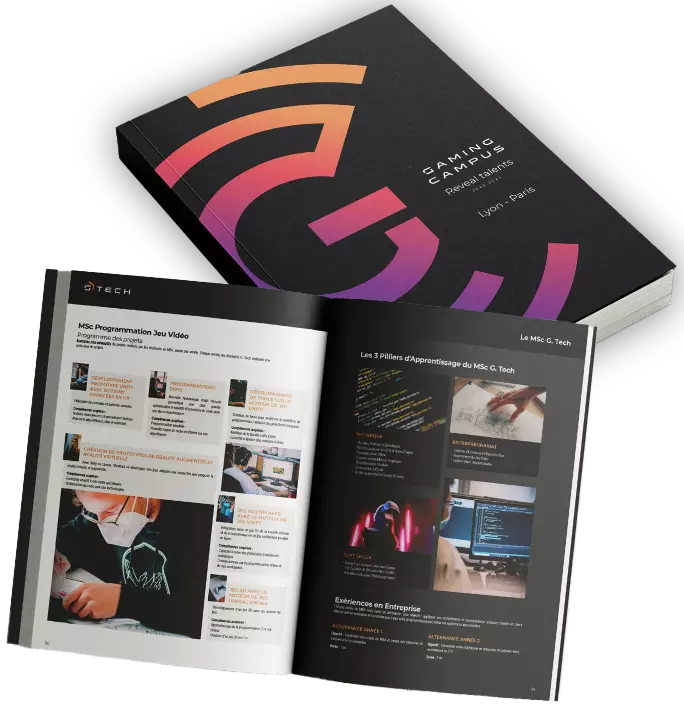
REQUEST A BROCHURE
194 pages covering everything about our campuses, schools, project-based learning, programmes, employability, campus life, etc…
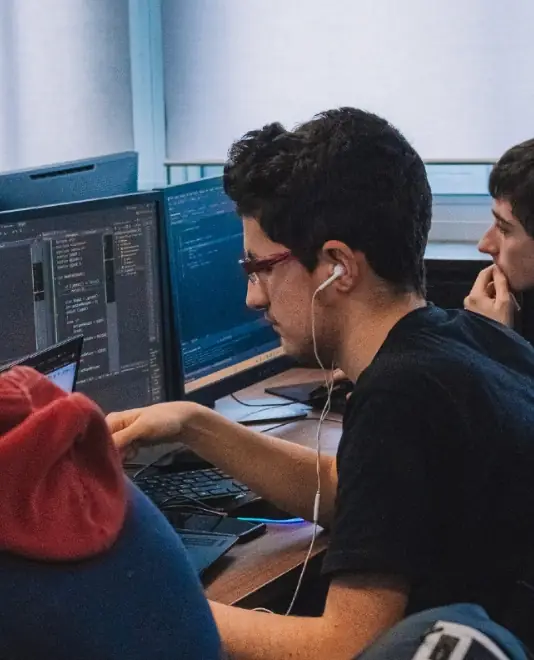
The MSc Expert in Advanced Video Game Development and AI:
Devised, designed and approved by the G. Tech advisory board.
- Design and optimise software architectures for video games, integrating advanced programming techniques (multithreading, memory management, SIMD)./li>
- Develop advanced rendering engines with Ray Tracing, HLSL shaders, supersampling (DLSS) and graphics performance optimisation.
- Apply advanced mathematics and physics to 3D simulation, rigid body dynamics and geometric transformations.
- Implement AI systems for gameplay (A*, behaviour trees, motion matching) and procedural content generation.
- Analyse and balance a game using telemetry, analytics and dynamic difficulty adjustment.
- Automate production pipelines with optimisation, versioning and generative AI tools (Copilot, ChatGPT).
- Develop a complete game project integrating the latest technological innovations.
- Performance optimisation (SIMD, SSE4/AVX)
- Multithreading and parallel programming
- Memory management and custom smart pointers
- Building a custom profiler
- Asset streaming and virtual texturing
- Linear algebra and geometry applied to 3D
- 2D/3D mechanics: rigid body dynamics, collisions and friction
- Vector calculus and transformations for animation and rendering
- CPU/GPU Ray Tracing (NVIDIA RTX)
- HLSL & Compute Shaders for advanced visual effects
- Occlusion Culling, Level of Detail (LOD), MipMapping
- NVIDIA DLSS4 and supersampling techniques
- Advanced animation systems (blend trees, IK, motion matching)
- AI for gameplay (A*, navmesh, behaviour trees, GOAP)
- Advanced physics for video games (PhysX, Bullet, Havok)
- Game analytics and telemetry
- Dynamic difficulty adjustment (AI + player behaviour)
- Procedural generation and adaptive content
- Production pipeline & automation (builds, versioning, AI tools)
- Using AI tools for development (Copilot, ChatGPT, etc.)
- Asset optimisation
- Development of an advanced video game project
- Integration of the technologies studied (advanced rendering, AI, optimisation)
- Presentation to a professional jury
- Placement in a studio or R&D lab
- Applying the skills acquired to a real project
- Final defence and skills review



Designed to validate skills in parallel GPU programming using CUDA C/C++
For the MSc Expert in Advanced Video Game Development and AI, we have opted for long internships rather than work-study in order to maximise the time devoted to training. You will therefore complete more projects and take part in more masterclasses and workshops. It will also be easier to consider sessions abroad. Here is a comparison of the 2 approaches:
take a look at our other MSc, MBA and Mastère programmes >
Several times a year, we organise masterclasses with companies and iconic figures from the video game industry, in France and abroad.
In workshops, professionals share their expertise on specific topics: presentation of a new technology, CV workshop, …
Immersion by Gaming Campus is a key stage in our schools' teaching approach. For 2 weeks, all our students, whatever their programme, level of study or specialism, come together to immerse themselves in the industry they are training for.
Employability Week, a real highlight of the year, brings our students together on site in Lyon and Paris, and online. In total, more than 50 industry professionals meet and talk with our students to boost their search for internships and work-study placements, and help our alumni find their first job. Meetups, workshops, speed recruiting…
An event that brings our students together on site and online. In total, more than 90 offers are available to students, and around thirty industry professionals come to meet and talk with them to boost their search for internships and work-study placements, and help our alumni find their first job.
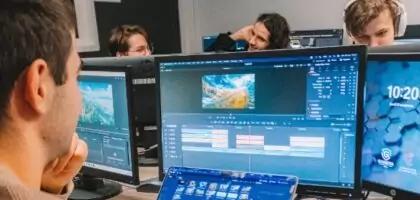
At the end of the programme, you receive a Gaming Campus skills book. You can use it to showcase yourself to companies and make the difference when looking for internships, a work-study placement or your first job. The title is awarded on validation of all skills blocks and the associated ECTS credits.
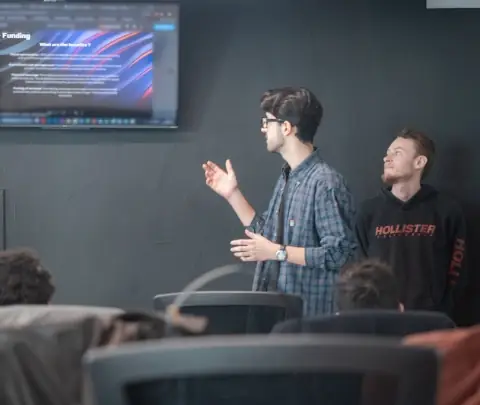
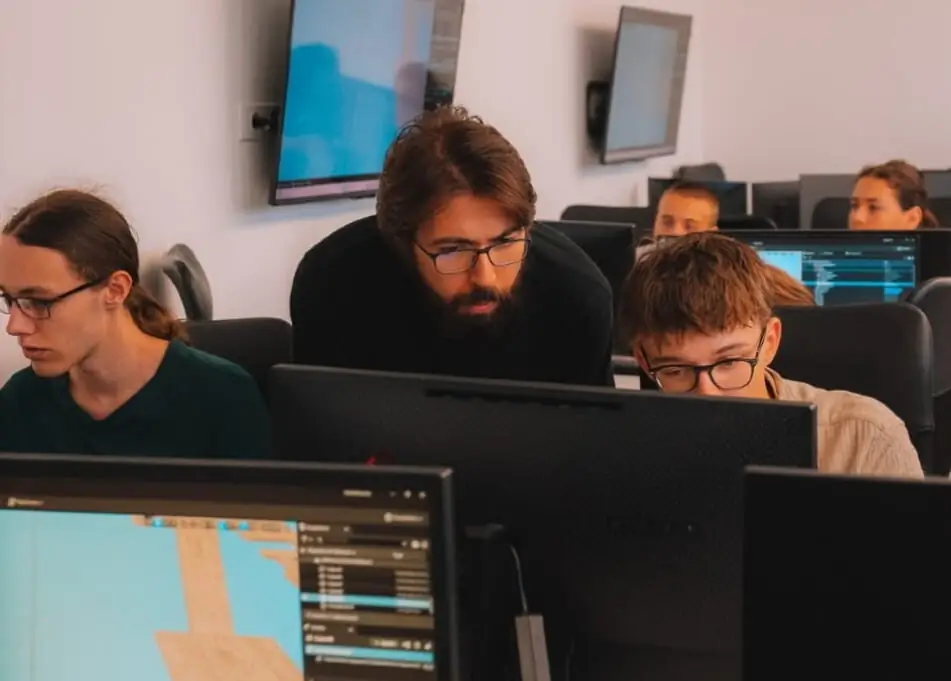
Our school's teaching approach is project-based learning (PBL). It builds skills and guarantees a very high level of employability. From Year 1 of the Mastère, you learn by doing. Your year is structured around 10 to 15 projects, and by the end of your programme you will have completed 75 projects. All your projects are supervised by professional lecturers. Some are real cases provided by video game companies.

How project-based learning is structured
01
Guided research
02
Project kick-off with the lecturer
03
Independent organisation of work, in a team or alone
04
Coaching by the lecturer
05
Submission of the deliverable
06
Project debrief
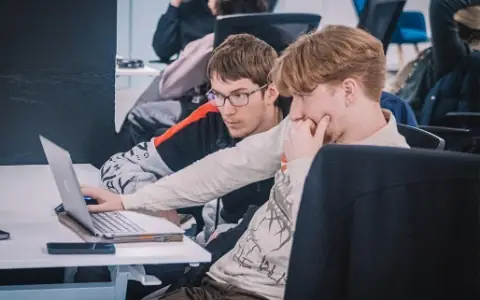
Project examples
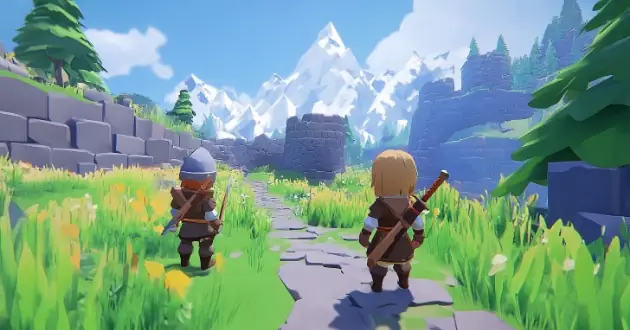
- Development of an advanced video game project
- Integration of the technologies studied (advanced rendering, AI, optimisation)

- HLSL & Compute Shaders for advanced visual effects
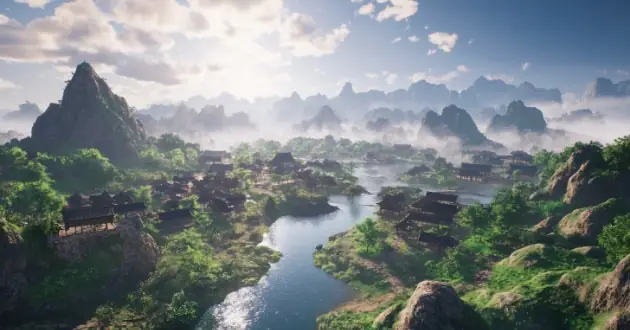
- Develop advanced rendering engines with Ray Tracing, HLSL shaders, supersampling (DLSS) and graphics performance optimisation.
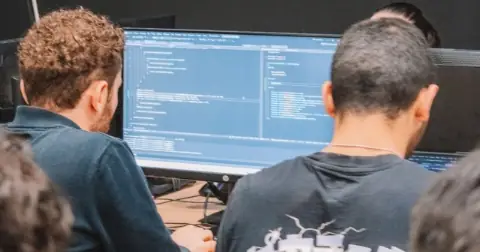
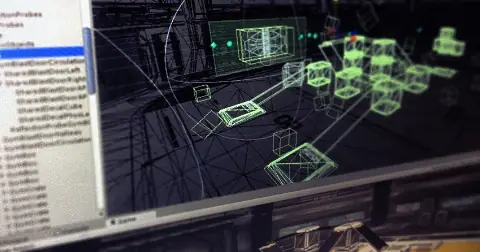
Project – Suite of graphics debugging and optimisation tools
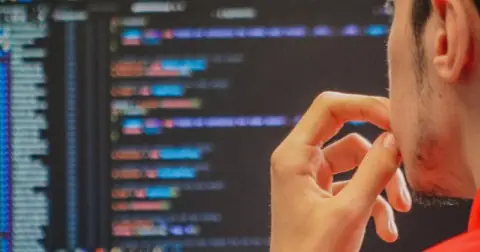
Project – Physics simulator and interactive environment
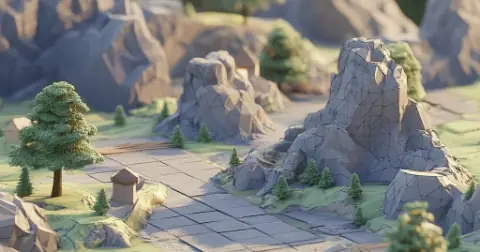
Project – Research and development in graphics optimisation
Project – Creation of procedural worlds
Sample timetables
Immersion Week
Immersion by Gaming Campus is a key stage in our schools' teaching approach. For 2 weeks, all our students, whatever their programme, level of study or specialism, come together to immerse themselves in the industry they are training for.
Project 1
Real-time rendering engine and visual demo
Project 2
Suite of graphics debugging and optimisation tools
Masterclass
Led by an industry professional
Project 3
Physics simulator and interactive environment
Project 4
Project management: learning management methods for art productions
Project 5
Creation of procedural worlds
Workshops
Job search strategy and tools
Project 6
Creation of a complete, optimised video game

Our lecturers

Peter Vystavel
C/C++ Programmer

Sylvain Seccia
C++ & DX Trainer
David Ramos
Lighting, special effects and Houdini trainer





















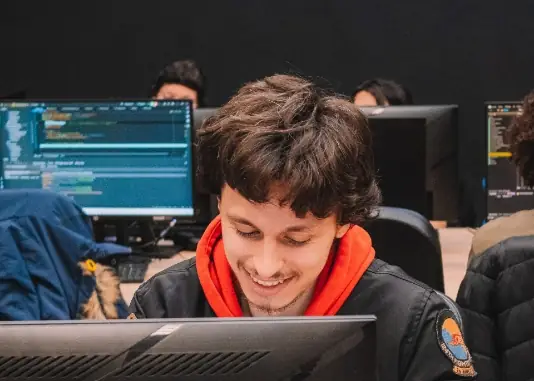
All Gaming Campus programmes put student employability at the heart of the curriculum. During your MSc Expert in Advanced Video Game Development and AI, you will have several opportunities to build your professional experience, notably through an end-of-studies internship in the 2nd year.
Why choose internships to train for the video game industry?
« With the end-of-programme internship, our aim is also to ease professional integration and recruitment by video game companies. To support our students in finding an internship, we have built impactful partnerships with companies in the industry. »
– The Corporate Relations team
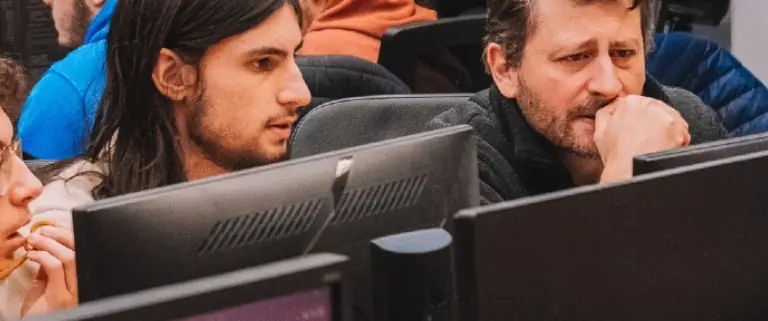
Objective: confirm your career plans through an extended immersion in the business world.
The corporate relations team
The teaching team and the employability unit help you find your end-of-Mastère internship: searches and applications.
Gaming Campus has built close relationships with more than 100 video game companies in France and abroad.
Several events are organised during the year for students to take part in: Employability Week; Career Days; workshops on CVs, cover letters and online identity; LinkedIn masterclass.
Your corporate relations contact: entreprises@questeducation.fr





Career prospects and salaries
The Mastère Animator and Rigger 2D/3D prepares you for a wide range of careers in animation, film, video games and entertainment. Here are the main jobs you will be trained for:



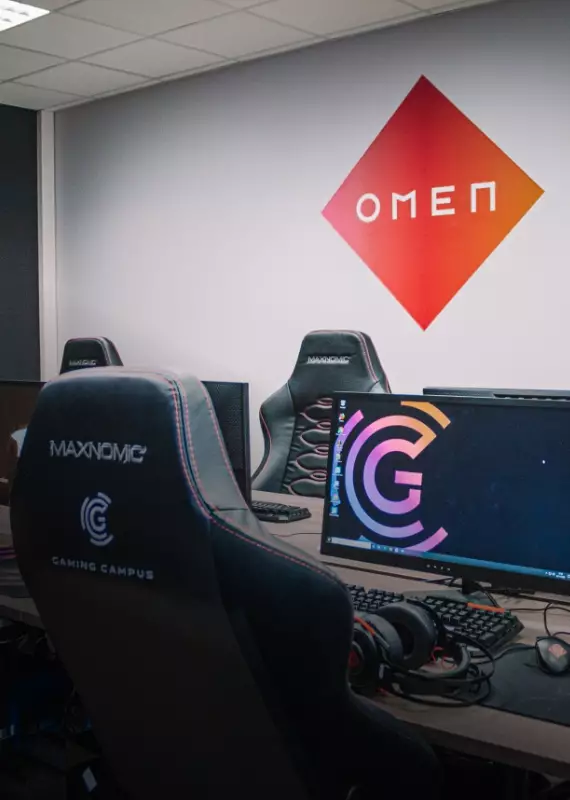
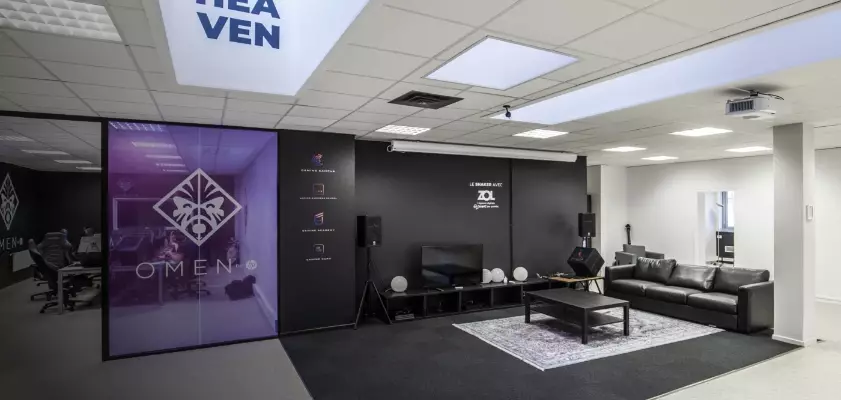
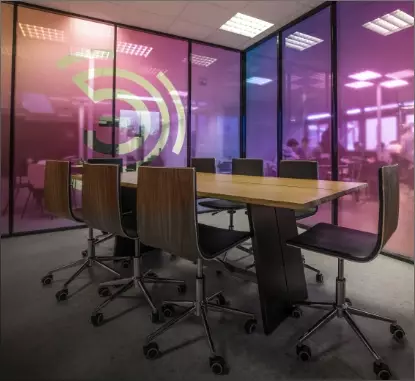
An exceptional 3,000 m2 campus in the heart of Lyon
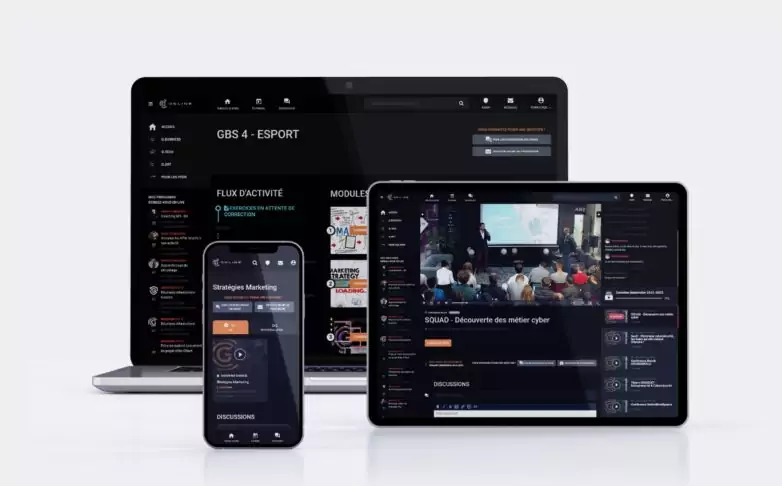
+ Gaming Campus Online, our digital platform Gaming Campus Lyon
Online school
Gaming Campus Online
Admissions
We attach great importance to the diversity of our cohorts. That is why we have chosen an application process based on your file (not a competitive exam). Each application (submitted online on our website) is reviewed by the admissions team and then the teaching team. For admission, we take into account your career plans, your academic background and our prerequisites. The admissions process is quick and smooth, with no need to go through Parcoursup. From the moment you submit your application, allow 15 days to be accepted, waitlisted or refused.
Hold a Bac+3 in art and design, computer science, technology or science. Bachelor, BUT or Licence.
Funding
Tuition fees are €10,400 incl. VAT* per year for the MSc years for the 2027–2028 intake. However, on a work-study basis, the programme is funded by apprenticeship funding bodies and you will also be paid.
(*) Price for payment in a single instalment. Payment in several instalments possible under certain conditions. Payment can be made in 1, 3 or 10 instalments. Stopping your studies due to force majeure (serious and disabling illness, accident, death of a relative) ends the direct debits.
Compare with other programmes, work-study and the 3 or 10 instalment schedule: the price of our Mastère and MSc programmes compared with Bachelors.
| Pre-registration | €650 incl. VAT |
| MSc single payment | €9,750 incl. VAT |
| Payment in 3 instalments | €10,000 incl. VAT |
| Payment in 10 instalments | €10,100 incl. VAT |
Financial aid
Student loan on preferential terms : LCL is G. Art's main banking partner. You can obtain special loan terms for your Mastère and a privileged relationship. Feel free to contact us for more information.
State-guaranteed student loan : since June 2020, the French State can act as guarantor for your loan to make it easier to obtain. Visit Etudiant.gouv.fr to find out more.
Campus jobs : Small jobs helping to develop the campus are sometimes available. The teaching team also gathers and shares small job offers near the campus.
City grants : Check with your town of residence, or your parents', to see whether you are eligible for the Student Minimum Income (RME). Not all towns offer the RME. It is awarded by the CCAS (municipal social action centre).
Département grants : For students on means-tested grants, the departmental councils offer annual grants or interest-free loans.
Fondation de France grants : 120 foundations award grants and interest-free loans. We encourage you to contact the Fondation de France to find out more.
Finding accommodation : We help you find accommodation through our network of housing partners. We have built close relationships with student residences near the campus.
FAQ
This MSc is for students who already hold a Bac+3 (computer science, video games, engineering school, etc.) and want to specialise in advanced video game development, technical optimisation, high-end graphics rendering and artificial intelligence applied to game development.
To train expert developers able to:
-
Design high-performance software architectures
-
Develop advanced rendering engines (Ray Tracing, DLSS, etc.)
-
Implement complex AI for gameplay
-
Optimise game performance at every level
-
Use modern automation and generative AI tools
-
Hold a Bac+3 or equivalent (180 ECTS credits)
-
Have a specialisation in video games, computer science or a related technical field
-
Pass a technical entrance test
-
Demonstrate at least a B1 level in English if you are preparing for the RNCP certification
- G.TECH programme: MSc Expert in Advanced Video Game Development and AI
- The CUDA Programming & Performance (NVIDIA) certification, valued on the job market. It is prepared in class, but taking the exam is optional and at the student's expense.
Here is an overview of the skills acquired:
-
Advanced programming (C++, multithreading, SIMD, CUDA)
-
Real-time rendering (Ray Tracing, HLSL, shaders, DLSS)
-
Physics simulation and 3D mathematics
-
AI systems (A*, behaviour trees, motion matching, etc.)
-
Game analytics, procedural generation, telemetry
-
Pipeline automation with AI tools (Copilot, ChatGPT, etc.)
100% project-based learning: learning by doing on real projects, always preceded by solid theoretical input. Projects include:
-
Real-time rendering engine
-
Compute shader particle system
-
Complete optimised video game with AI and advanced rendering
-
Graphics debugging tools
-
3D physics simulation
Target careers:
-
Engine / Tools / AI / Physics / Shader Developer
-
Rendering / Ray Tracing Developer
-
GPU Engineer
-
Graphics software architect
-
R&D developer in a studio or tech lab
Apply for the programme
Simple application, quick response:
September 2027 intake: Applications open
We have chosen an application process with no competitive exam and without going through ParcourSup or Mon Master. This allows us to review each application individually and maximise equal opportunities and each candidate's potential. It also lets us give the academic background the same weight as the career plan. Finally, with a short admissions process based on dialogue, we hope to reduce students' stress when looking for a programme.
Apply now
For any problem sending this form, write to contact@gamingcampus.fr